Texture is one of the most important elements shaping an outfit’s feel, depth and perceived value. It often goes unnoticed — yet everyone senses it.
1. Texture adds depth
Texture takes an outfit from two dimensions into three. The eye naturally moves between pieces with different surfaces.
Think of these textures:
- Plain cotton — matte and simple
- Wool — slightly fibrous and warm
- Suede — soft and gentle
- Leather — glossy or matte, with a sharp edge
- Denim — rugged and strong
When these textures come together, an outfit looks fuller and richer.
2. One colour, a premium impression
With neutral shades such as black, beige and grey, the sense of luxury comes from texture rather than colour.
Consider a monochrome outfit:
- A black cotton T-shirt
- A black wool overshirt
- A black leather belt
- Black suede loafers
One colour, four different textures. This is why the result never looks flat or dull. It is exactly what gives monochrome dressing its strength.
The strength of monochrome lies in its subtle differences in texture.
3. Clean transitions between layers
Layering is not simply about adding pieces. Good layering depends on transitions in texture.
For example:
- Base layer: a cotton T-shirt
- Middle layer: a wool blazer
- Outer layer: a gabardine trench coat
As the texture changes from one layer to the next, the eye follows the lines easily and the silhouette becomes clearer. The outfit reads as a composition, rather than a collection of separate pieces.
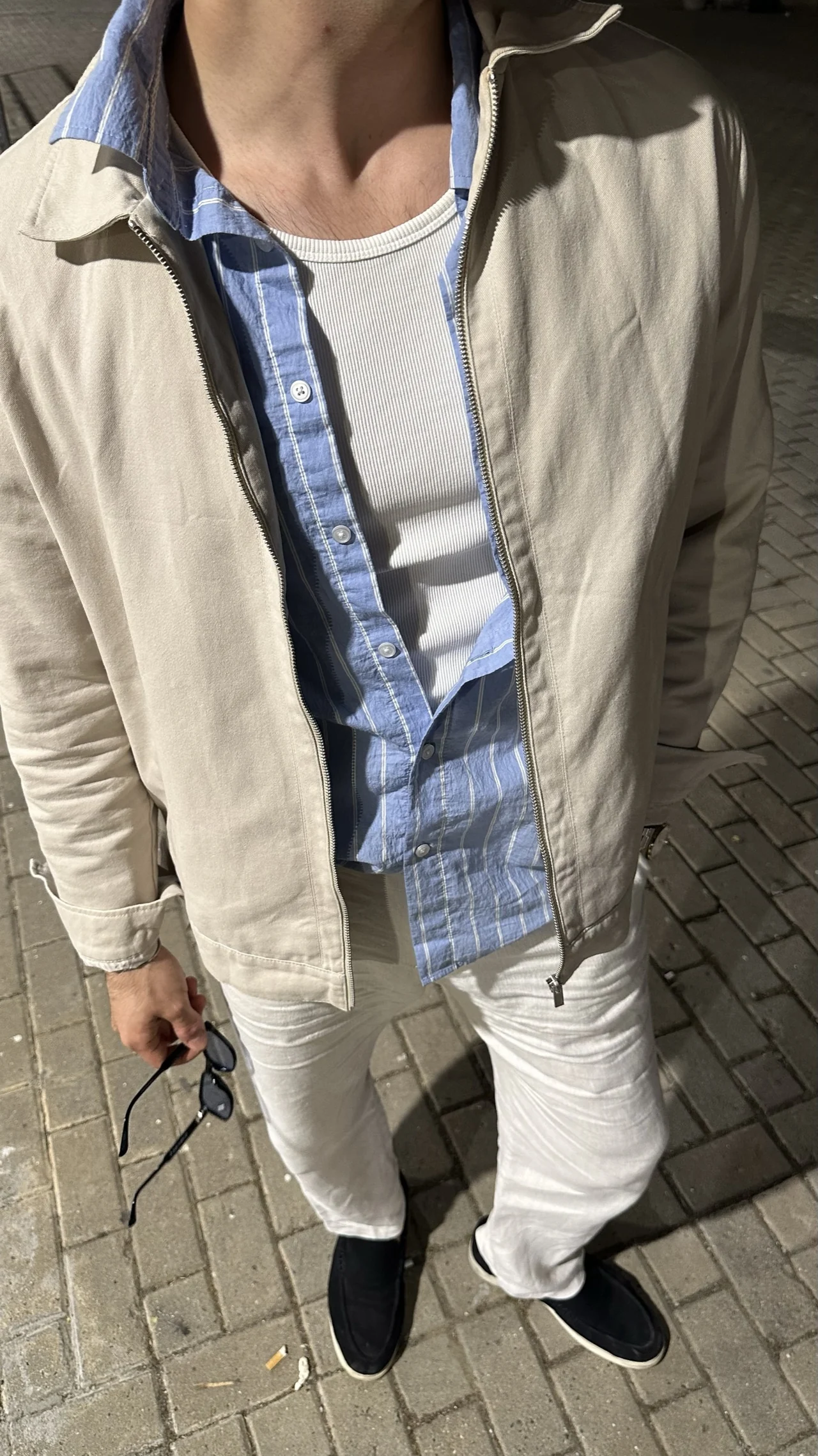
A white T-shirt, a blue striped shirt and a light jacket. Each layer stays visible; the whole comes together through colour and texture.
4. Balance soft and structured textures
A well-balanced outfit usually pairs a soft texture with a more structured one.
Soft textures: suede, cashmere, wool.
Structured textures: denim, leather, gabardine.
For example: a beige suede bomber jacket (soft) with dark denim trousers (structured).
Why does this combination work? Because the textures contrast. Contrast creates an ordered visual balance.
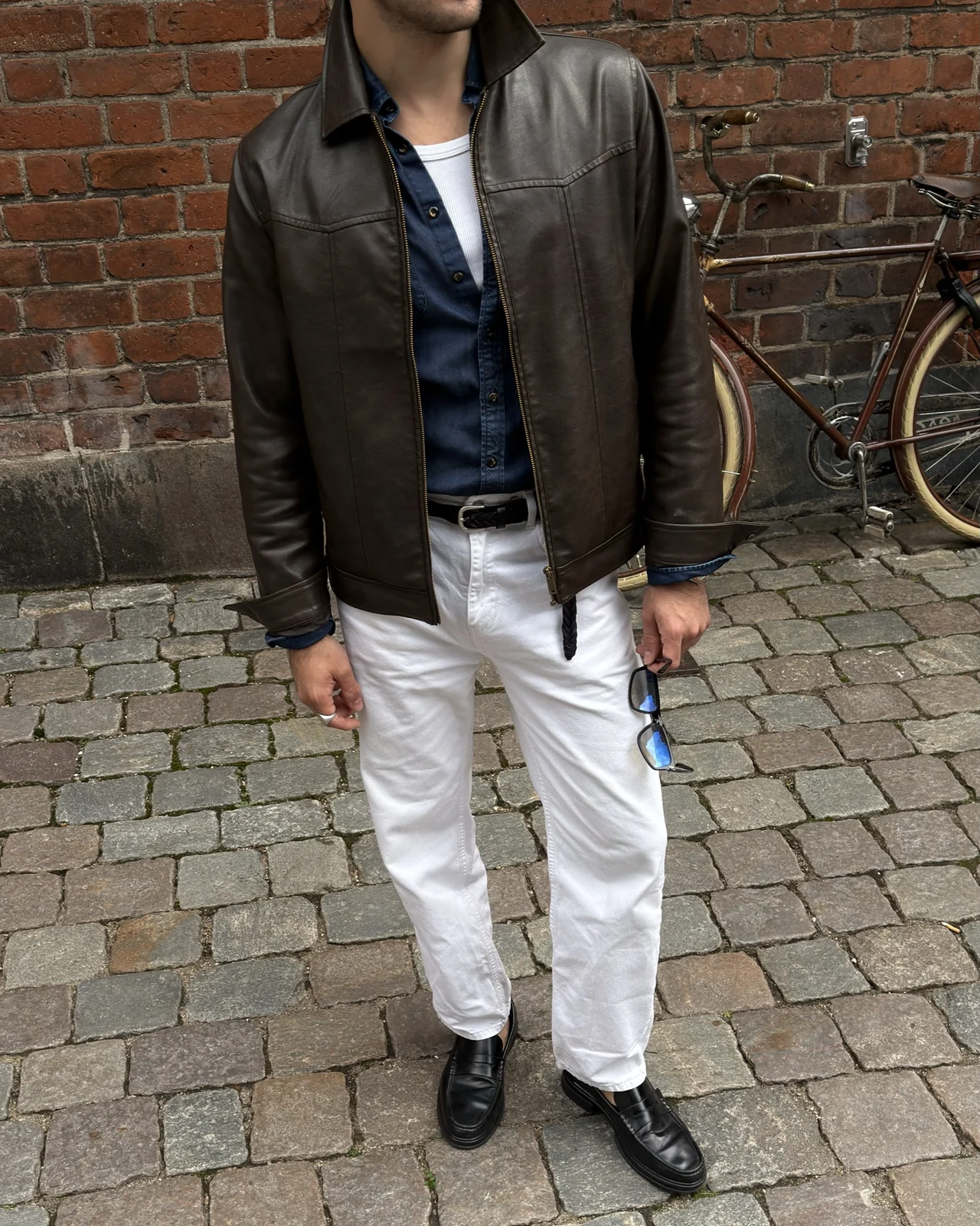
A leather jacket, a denim shirt and white trousers. The jacket’s defined surface and the shirt’s texture bring different layers of depth to the same outfit.
5. Minimal, yet rich
An unbranded outfit with thoughtfully chosen textures can look more affluent than a branded one made entirely of flat, uniform fabrics.
This is a fundamental reason premium brands appear expensive: each piece speaks through a different texture.
Luxury does not shout.
It whispers through texture.
A practical formula for using texture
- Base layer: keep it simple. A cotton T-shirt or a basic knit.
- Upper layer: introduce texture. A wool blazer, ribbed knit or suede coat.
- Trousers: neutral, with a little texture. Denim, gabardine or a wool blend.
- Shoes: add character through texture. Leather → sharp; suede → soft; canvas → casual.
- Accessories: bring in texture. A bag or belt is the outfit’s signature.
The secret to a premium appearance: a balanced contrast of textures.
Alperen Aydın